Research Group
Linguistic Engineering Group
The Linguistic Engineering Group (Pol. Zespół Inżynierii Lingwistycznej; ZIL) works on multiple aspects of Natural Language Processing, with a particular focus on information extraction, semantic text processing, and corpus linguistics for Polish and beyond.
The Group develops widely used resources and tools — including the National Corpus of Polish (NKJP), the Polish Dependency Treebank, the Grammatical Dictionary of the Polish Language, terminology extractors TermoPL and TermoUD, and open-source systems such as LAMBO, COMBO, Morfeusz, and Korpusomat — that underpin tagging, parsing, and corpus analysis pipelines for Polish.
ZIL participates in the CLARIN-PL and DARIAH-PL research infrastructures and COST actions (currently as Grant Holder of UniDive), and runs numerous national and international projects funded by sources including NCN, NCBR, FNP, NAWA, NPRH, CEF, Horizon 2020, and DIGITAL.
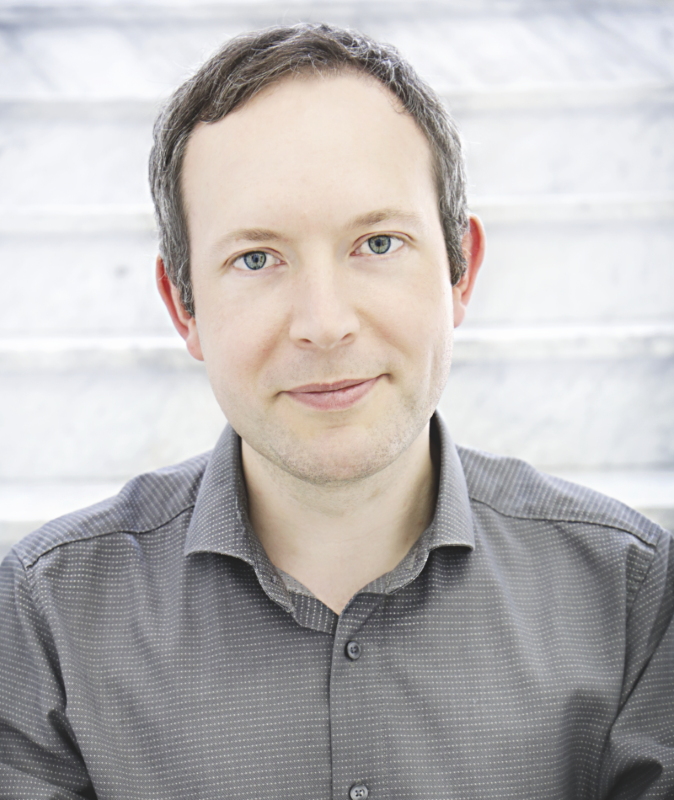
Group Head
Łukasz Kobyliński, PhD
Łukasz Kobyliński the Head of the Linguistic Engineering Group at Institute of Computer Science, Polish Academy of Sciences, focusing on the area of machine learning in NLP, corpus linguistics and document understanding.
Faculty Members
Meet the faculty members contributing to research in the Linguistic Engineering Group.

Publications
Browse publications authored by faculty members affiliated with the Linguistic Engineering Group.
2026
AI-Powered Knowledge Discovery in the Digital Library of Old Ephemeral Prints: A Case Study
Intelligence and Equity: Shaping the Future of Knowledge, 16242:264–277, 2026
Authors
- Maciej Ogrodniczuk
- Dariusz Czerski


Intelligence and Equity: Shaping the Future of Knowledge, 16242:264–277, 2026
Maciej Ogrodniczuk, Dariusz Czerski
Maciej Ogrodniczuk and Dariusz Czerski. AI-Powered Knowledge Discovery in the Digital Library of Old Ephemeral Prints: A Case Study. In Sanghee Oh, Antoine Doucet, Marut Buranarach, Iyra Buenrostro-Cabbab, Yuenan Liu, and Benedict Salazar Olgado, editors, Intelligence and Equity: Shaping the Future of Knowledge, number 16242 in Lecture Notes in Computer Science, pages 264–277, Singapore, 2026. Springer Nature Singapore. URL PDF DOI
2026
The Role of Gender in the Evaluation of Politicians in an Online Debate: Evidence from a Natural Experiment
Journal of Language and Politics, 2026
Authors
- Natalia Zawadzka-Paluektau
Journal of Language and Politics, 2026
Natalia Zawadzka-Paluektau
Natalia Zawadzka-Paluektau. The Role of Gender in the Evaluation of Politicians in an Online Debate: Evidence from a Natural Experiment. Journal of Language and Politics, 2026. DOI
2026
Rethinking the Evaluation of Alignment Methods: Insights into Diversity, Generalisation, and Safety
Proceedings of the 19th Conference of the European Chapter of the Association for Computational Linguistics (Volume 4: Student Research Workshop), 92–109, 2026
Authors
- Denis Janiak
- Julia Moska
- Dawid Motyka
- Karolina Seweryn
- Paweł Walkowiak
- Bartosz Żuk
- Arkadiusz Janz
2026
Rethinking the Evaluation of Alignment Methods: Insights into Diversity, Generalisation, and Safety
Proceedings of the 19th Conference of the European Chapter of the Association for Computational Linguistics (Volume 4: Student Research Workshop), 92–109, 2026
Denis Janiak, Julia Moska, Dawid Motyka, Karolina Seweryn, Paweł Walkowiak, Bartosz Żuk, Arkadiusz Janz
Denis Janiak, Julia Moska, Dawid Motyka, Karolina Seweryn, Paweł Walkowiak, Bartosz Żuk, and Arkadiusz Janz. Rethinking the Evaluation of Alignment Methods: Insights into Diversity, Generalisation, and Safety. In Selene Baez Santamaria, Sai Ashish Somayajula, and Atsuki Yamaguchi, editors, Proceedings of the 19th Conference of the European Chapter of the Association for Computational Linguistics (Volume 4: Student Research Workshop), pages 92–109, Rabat, Morocco, 2026. Association for Computational Linguistics. URL PDF
2026
Parliaments in Focus: Language, Gender, and the Pandemic in Parliaments
Gender and Language, 20(1):9–37, 2026
Authors
- Kristina Maiti Tekavčič
- Ksenija Bogetić
- Petya Osenova
- Maciej Ogrodniczuk
- Darja Fišer
Gender and Language, 20(1):9–37, 2026
Kristina Maiti Tekavčič, Ksenija Bogetić, Petya Osenova, Maciej Ogrodniczuk, Darja Fišer
Kristina Maiti Tekavčič, Ksenija Bogetić, Petya Osenova, Maciej Ogrodniczuk, and Darja Fišer. Parliaments in Focus: Language, Gender, and the Pandemic in Parliaments. Gender and Language, 20(1):9–37, 2026. DOI
2026
The Multilingual Euphemism Benchmark: Datasets and Baselines for Pragmatic Language Understanding
Proceedings of the Fifteenth Language Resources and Evaluation Conference (LREC 2026), 7307–7319, 2026
Authors
- Whitney Poh
- Julia Sammartino
- Jasper Andrew
- Witold Kieraś
- Natalia Zawadzka-Paluektau
- Iryna Dilai
- Libby Barak
- JIng Peng
- Anna Feldman
2026
The Multilingual Euphemism Benchmark: Datasets and Baselines for Pragmatic Language Understanding
Proceedings of the Fifteenth Language Resources and Evaluation Conference (LREC 2026), 7307–7319, 2026
Whitney Poh, Julia Sammartino, Jasper Andrew, Witold Kieraś, Natalia Zawadzka-Paluektau, Iryna Dilai, Libby Barak, JIng Peng, Anna Feldman
Whitney Poh, Julia Sammartino, Jasper Andrew, Witold Kieraś, Natalia Zawadzka-Paluektau, Iryna Dilai, Libby Barak, JIng Peng, and Anna Feldman. The Multilingual Euphemism Benchmark: Datasets and Baselines for Pragmatic Language Understanding. In Stelios Piperidis, Núria Bel, Henk Heuvel, Nancy Ide, Simon Krek, and Antonio Toral, editors, Proceedings of the Fifteenth Language Resources and Evaluation Conference (LREC 2026), pages 7307–7319, Palma, Mallorca, Spain, 2026. European Language Resources Association (ELRA). DOI
2026
The Corpus of Contemporary Polish — a New Reference Corpus with Rich Syntactic Annotations
Proceedings of the Fifteenth Language Resources and Evaluation Conference (LREC 2026), 11585–11592, 2026
Authors
- Witold Kieraś
- Małgorzata Marciniak
- Marcin Woliński
- Katarzyna Krasnowska-Kieraś
- Marek Łaziński
Proceedings of the Fifteenth Language Resources and Evaluation Conference (LREC 2026), 11585–11592, 2026
Witold Kieraś, Małgorzata Marciniak, Marcin Woliński, Katarzyna Krasnowska-Kieraś, Marek Łaziński
Witold Kieraś, Małgorzata Marciniak, Marcin Woliński, Katarzyna Krasnowska-Kieraś, and Marek Łaziński. The Corpus of Contemporary Polish — a New Reference Corpus with Rich Syntactic Annotations. In Stelios Piperidis, Núria Bel, Henk Heuvel, Nancy Ide, Simon Krek, and Antonio Toral, editors, Proceedings of the Fifteenth Language Resources and Evaluation Conference (LREC 2026), pages 11585–11592, Palma, Mallorca, Spain, 2026. European Language Resources Association (ELRA). DOI
2026
Keys to Populism? Exploring Varieties of Mainstream Populist Discourse through Key Item Analysis
Studies in Polish Linguistics, 21(1):19–46, 2026
Authors
- Natalia Zawadzka-Paluektau
- Witold Kieraś
2026
Keys to Populism? Exploring Varieties of Mainstream Populist Discourse through Key Item Analysis
Studies in Polish Linguistics, 21(1):19–46, 2026
Natalia Zawadzka-Paluektau, Witold Kieraś
2026
Styl i strategia komunikacji wyborczej w przemówieniach kampanijnych Jarosława Kaczyńskiego i Donalda Tuska z perspektywy kwantytatywnej
LingVaria, 21(1):111–127, 2026
Authors
- Witold Kieraś
LingVaria, 21(1):111–127, 2026
Witold Kieraś
2026
Fables-DTR: A Corpus of Fables Annotated for Discourse and Temporal Relations
Proceedings of the Fifteenth Language Resources and Evaluation Conference (LREC 2026), 1856–1868, 2026
Authors
- Purificação Silvano
- António Leal
- Maciej Ogrodniczuk
- Aleksandra Tomaszewska
- Joana Gomes
- Luís Filipe Cunha
- Evelin Amorim
- Martyna Lewandowska
- Anna Śliwicka
- Alípio Jorge
Proceedings of the Fifteenth Language Resources and Evaluation Conference (LREC 2026), 1856–1868, 2026
Purificação Silvano, António Leal, Maciej Ogrodniczuk, Aleksandra Tomaszewska, Joana Gomes, Luís Filipe Cunha, Evelin Amorim, Martyna Lewandowska, Anna Śliwicka, Alípio Jorge
Purificação Silvano, António Leal, Maciej Ogrodniczuk, Aleksandra Tomaszewska, Joana Gomes, Luís Filipe Cunha, Evelin Amorim, Martyna Lewandowska, Anna Śliwicka, and Alípio Jorge. Fables-DTR: A Corpus of Fables Annotated for Discourse and Temporal Relations. In Stelios Piperidis, Núria Bel, Henk Heuvel, Nancy Ide, Simon Krek, and Antonio Toral, editors, Proceedings of the Fifteenth Language Resources and Evaluation Conference (LREC 2026), pages 1856–1868, Palma, Mallorca, Spain, 2026. European Language Resources Association (ELRA). URL PDF DOI
2026
LocalGovPL: A Corpus of Speaker-Attributed Polish Local Government Transcripts
Proceedings of the Fifteenth Language Resources and Evaluation Conference (LREC 2026), 7883–7893, 2026
Authors
- Dariusz Czerski
- Maciej Ogrodniczuk
Proceedings of the Fifteenth Language Resources and Evaluation Conference (LREC 2026), 7883–7893, 2026
Dariusz Czerski, Maciej Ogrodniczuk
Dariusz Czerski and Maciej Ogrodniczuk. LocalGovPL: A Corpus of Speaker-Attributed Polish Local Government Transcripts. In Stelios Piperidis, Núria Bel, Henk Heuvel, Nancy Ide, Simon Krek, and Antonio Toral, editors, Proceedings of the Fifteenth Language Resources and Evaluation Conference (LREC 2026), pages 7883–7893, Palma, Mallorca, Spain, 2026. European Language Resources Association (ELRA). URL PDF DOI
Selected Projects
Explore current initiatives led by the Linguistic Engineering Group. Each project demonstrates how cutting-edge language technology is deployed to solve complex analytical challenges.

Ministry of Digital Affairs grant
PLLuM – Polish Large Language Model
The consortium’s goal is to develop the first open Polish LLM and an associated smart assistant. The project will adhere to ethical and responsible best practices in AI, incorporating data representativeness, transparency and fairness.
Lead: Maciej Ogrodniczuk

Polish National Science Centre grant
Universal Discourse: a multilingual model of discourse relations
The project intends to create a unified description of discourse relations (at the level of discourse markers, relation arguments and types) in the multilingual setting by harmonizing current corpus-based discourse representation models.
Lead: Maciej Ogrodniczuk